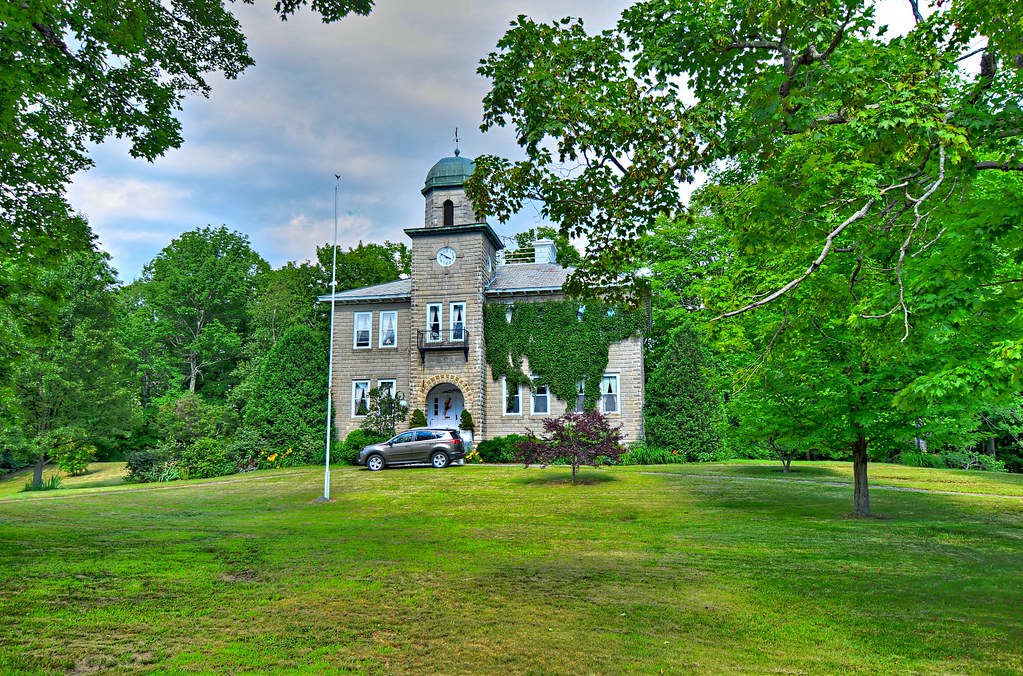
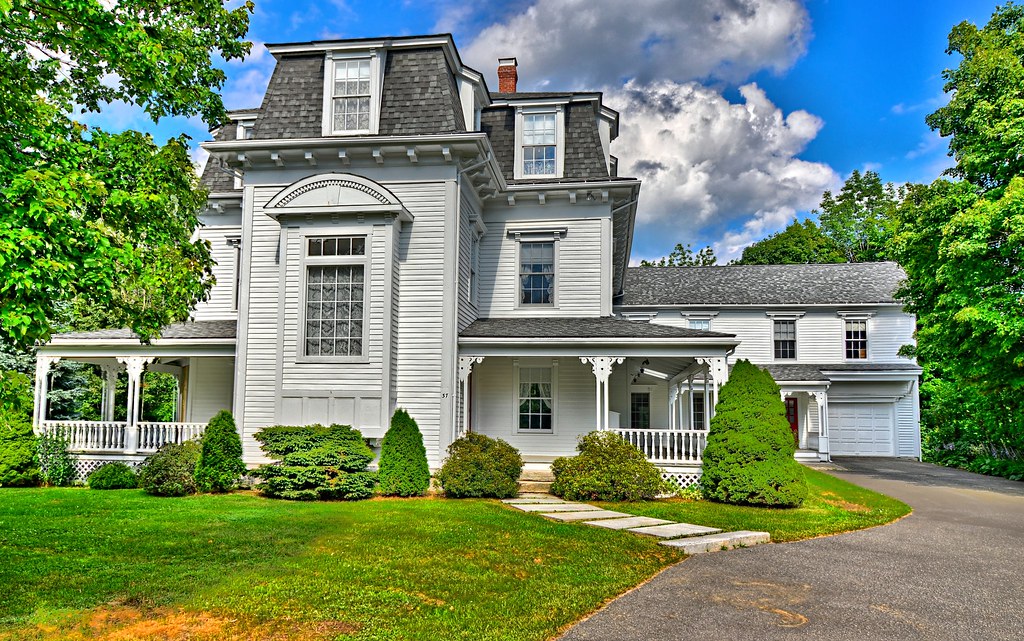
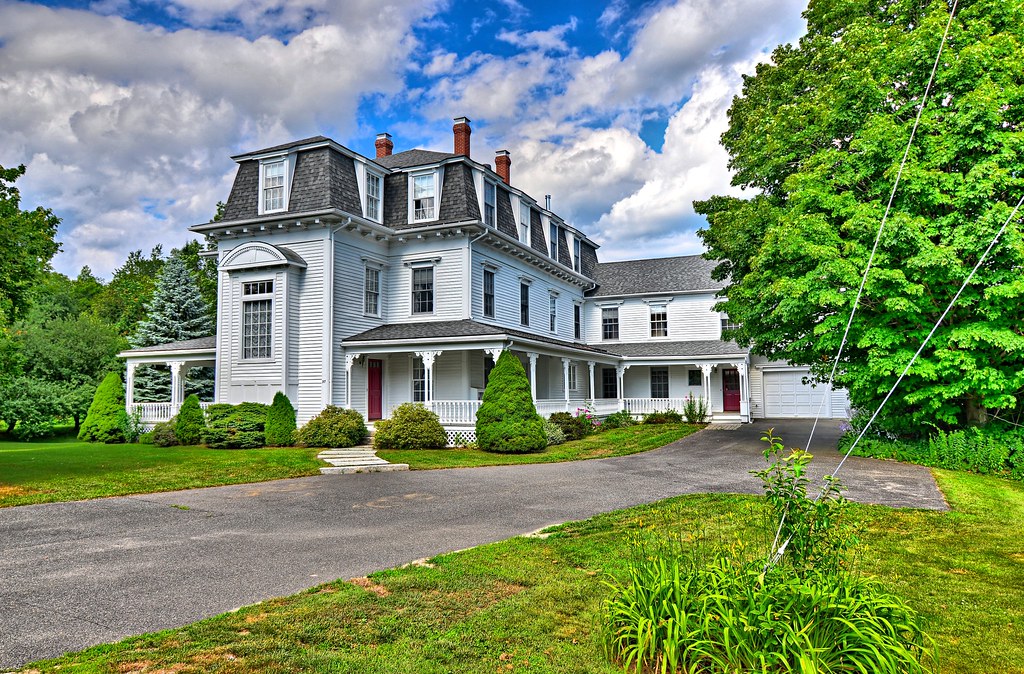
Sunday, April 6, 2014

Nosing Around the Nooks and Crannies of Worcester

Having been cooped up all winter, it was time to get out and stretch these titanium legs (well at least that's what I think is in there). I had 1 spot in Worcester that I failed to get when I was out taking pictures of Institution Historical District and this makes a perfect excuse to grab so other places. No districts today, simply grabbing places on the National Register of Historic Places.


Worcester, historically is the story of beginning America, growing thru the decades into a an industrial hotspot and then dying and then trying to make a comeback. What I have learned is the Salisbury family, one of the founding folks, was instrumental in making Worcester a diverse industrial city, then taking the profits they made and making Worcester culturally dynamic. They were instrumental in the early industry from stores, to factories and the seed for the Worcester Art Museum. There were 3 Salisbury all named Stephen. First was Stephen and then Stephen II and finally Stephen III.


First place I hit was the Bliss Building. This sits on Old Lincoln St. At one time this was a vibrant neighborhood, but the Bliss Building is really all that is left. Built in 1888, it has survived intact and still provides housing to Worcester residents. I am sure if the walls could talk (maybe they can) the stories would make a long running reality show on TV.
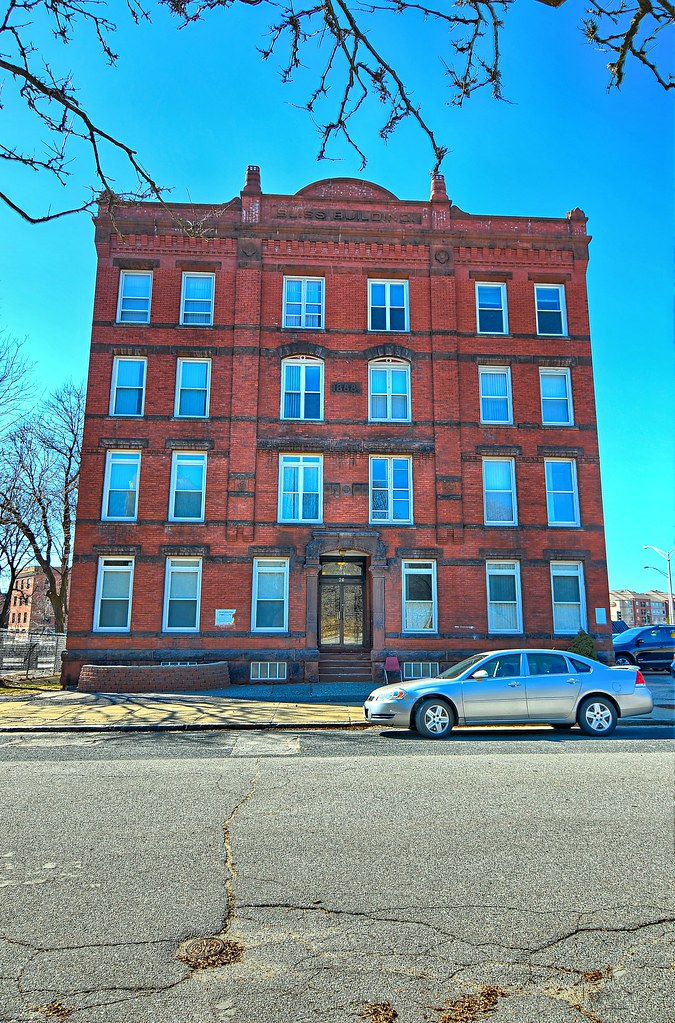
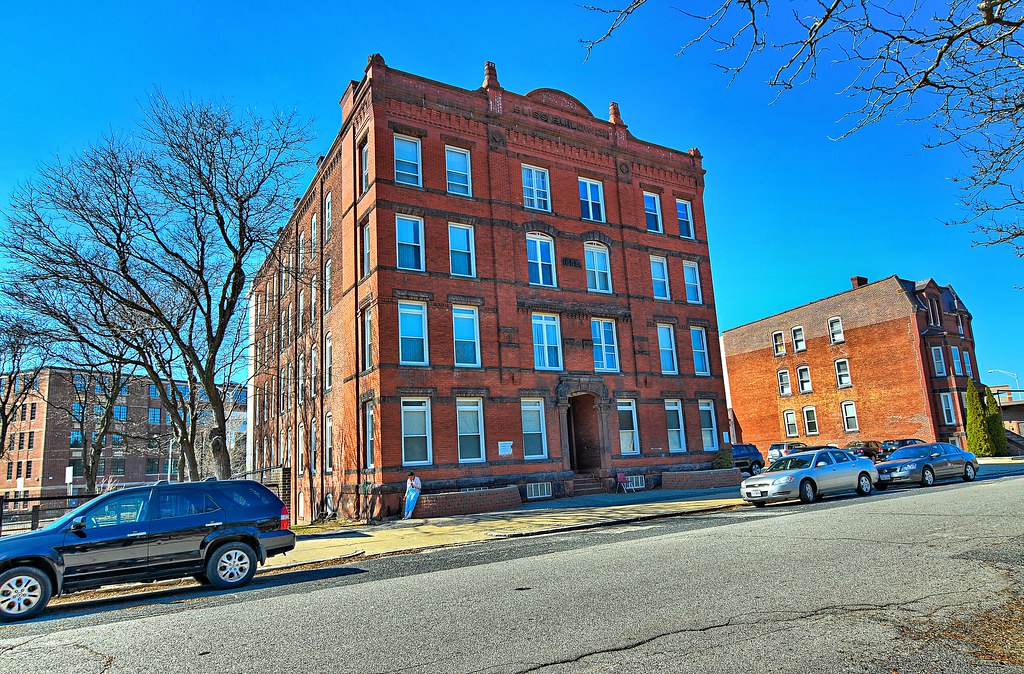
Bliss Building Worcester MA


Bliss Building Worcester MA

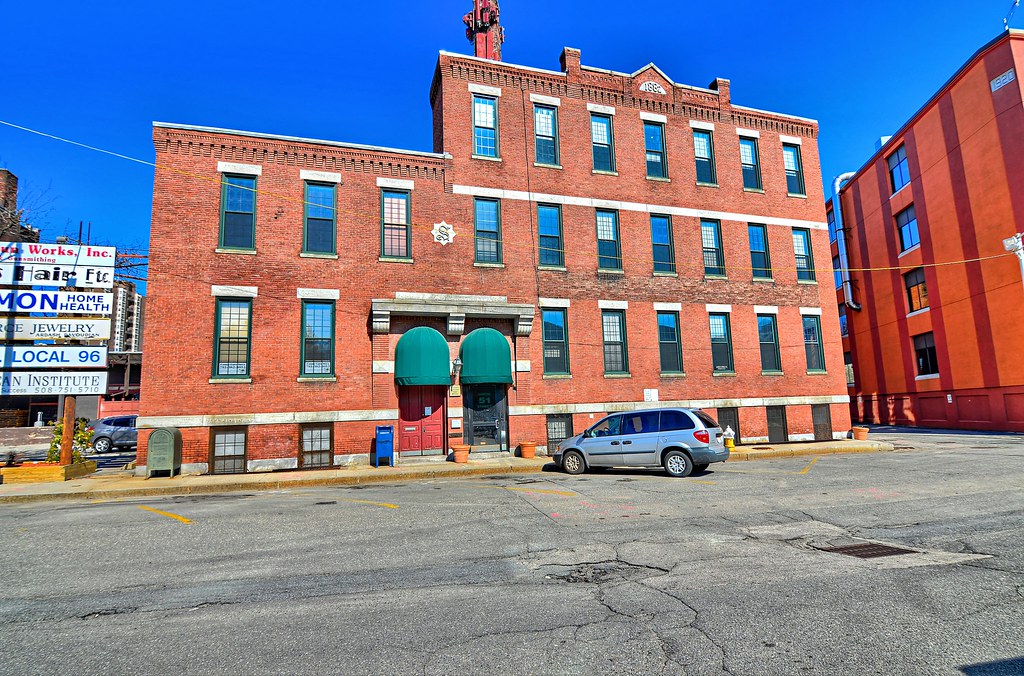
Next stop is the Salisbury Factory buildings. There is really nothing really special about these in their looks. Stephen III built these factories on the site of the Court Mills which the family had owned. Plain brick buildings except these were built specifically to rent out space versus putting his own industry in. The Munroe Organ Reed Company and Worcester Barbed Wire Fence Company occupied these early on. One was built in 1879 and the other 1882. These are located on Union St and sit at then end of an industrial area. These 2 buildings are what is left of the old Worcester. Modern buildings surround them.
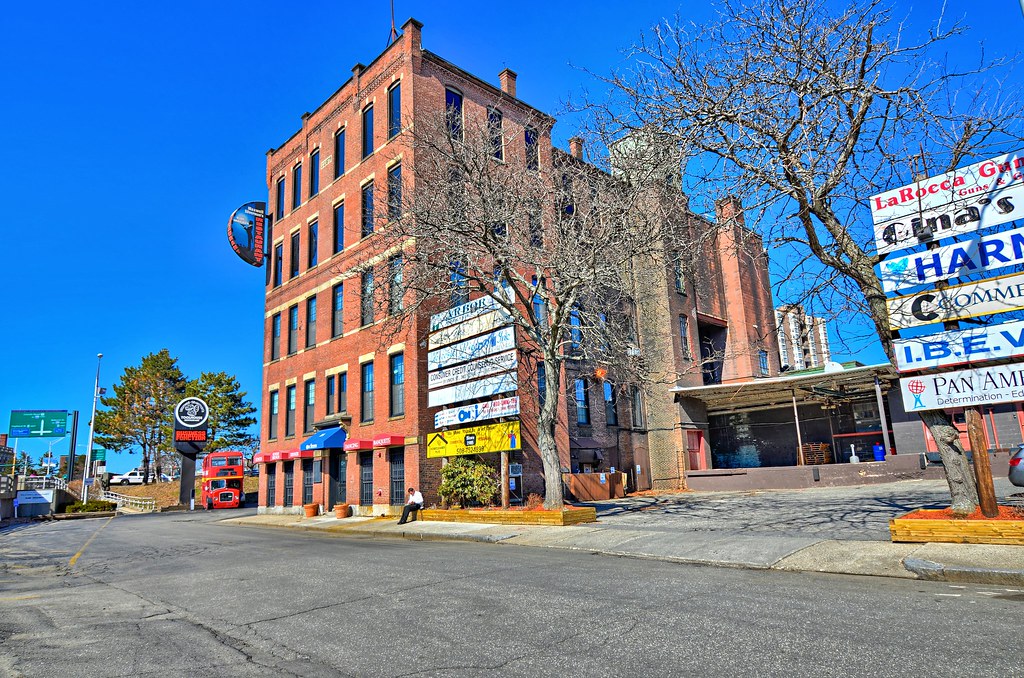
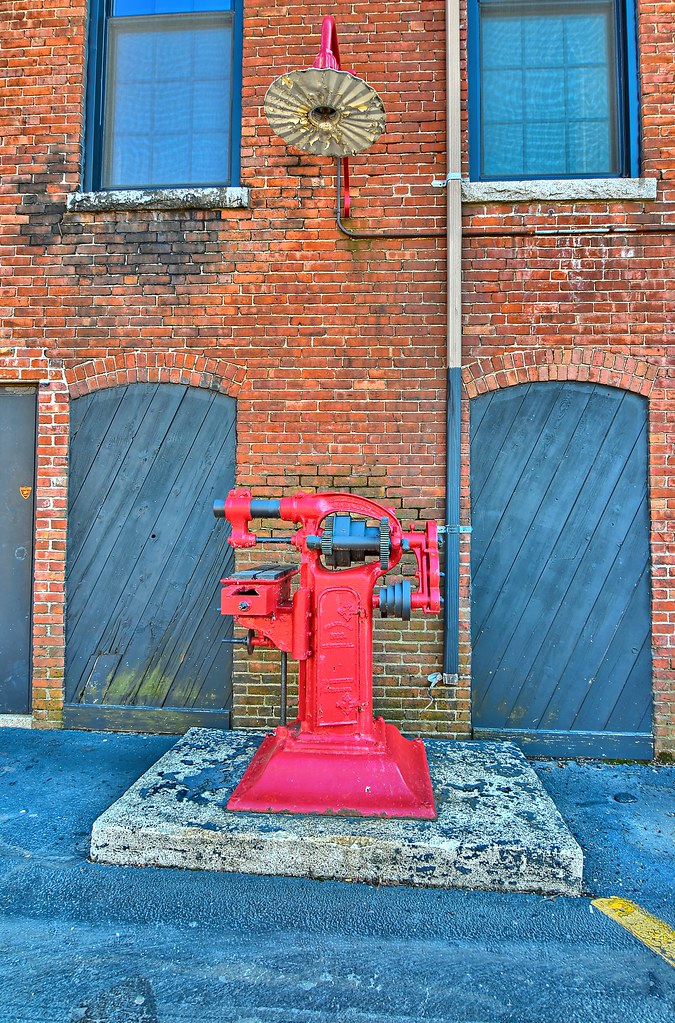
Salisbury Factory Building

DSC_8891_2_3WOJ_Real ESS St


Salisbury Factory Building

Back in the fall I photodocked Institutional Historic District, which covered the Old Court House to Memorial Hall, Art Museum area. The only place I left out was the Worcester Industrial Technical Institute (that's the historical name), so here it is.
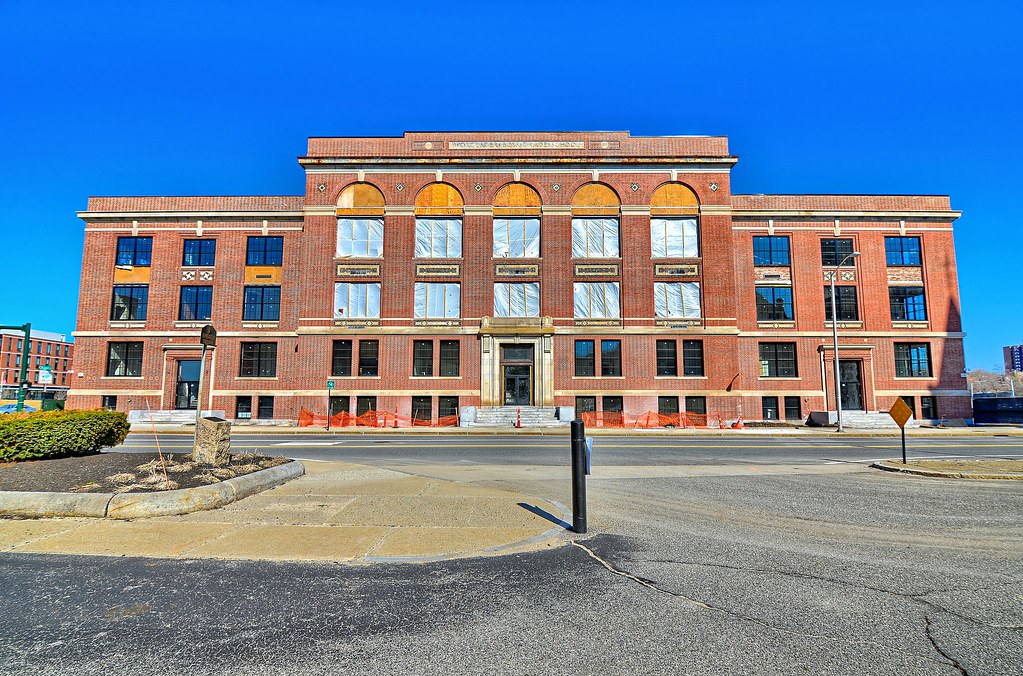
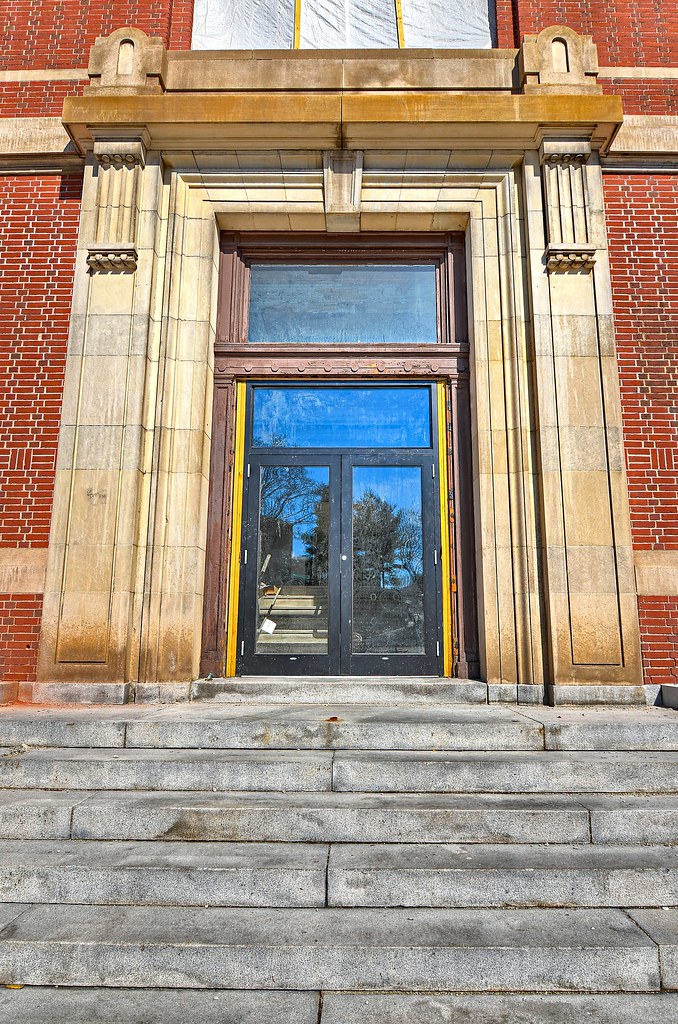
Worcester Industrial Technical Institute

Worcester Industrial Technical Institute


While I was tagging the school, I came across one of those white Mass Historical Markers. I quite a few of these and when I complete the NH ones I will then attack these.
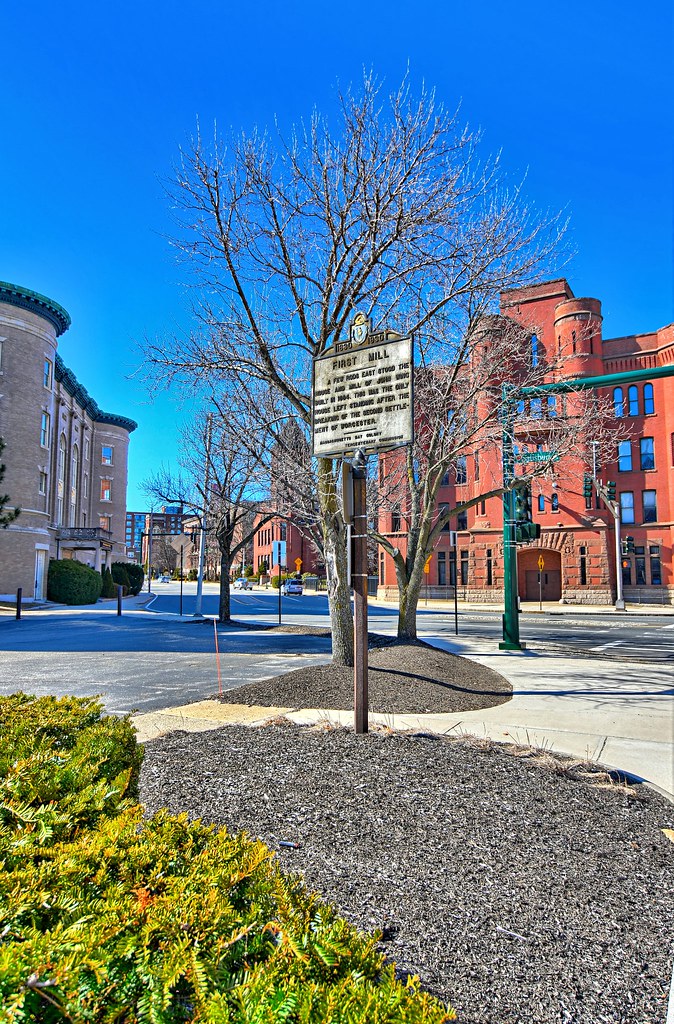
First Mill Mass Historical Marker


Down Main St, just passed the old Court House the commercial area of Worcester begins. I grabbed 3 separately listed buildings on the NRHP.

Elwood Adams Hardware is the first brick building built in Worcester (1831. It was originally 2 1/2 stories. The first one built on this site was constructed in 1782. It just might be the oldest continuously run hardware store in the US.
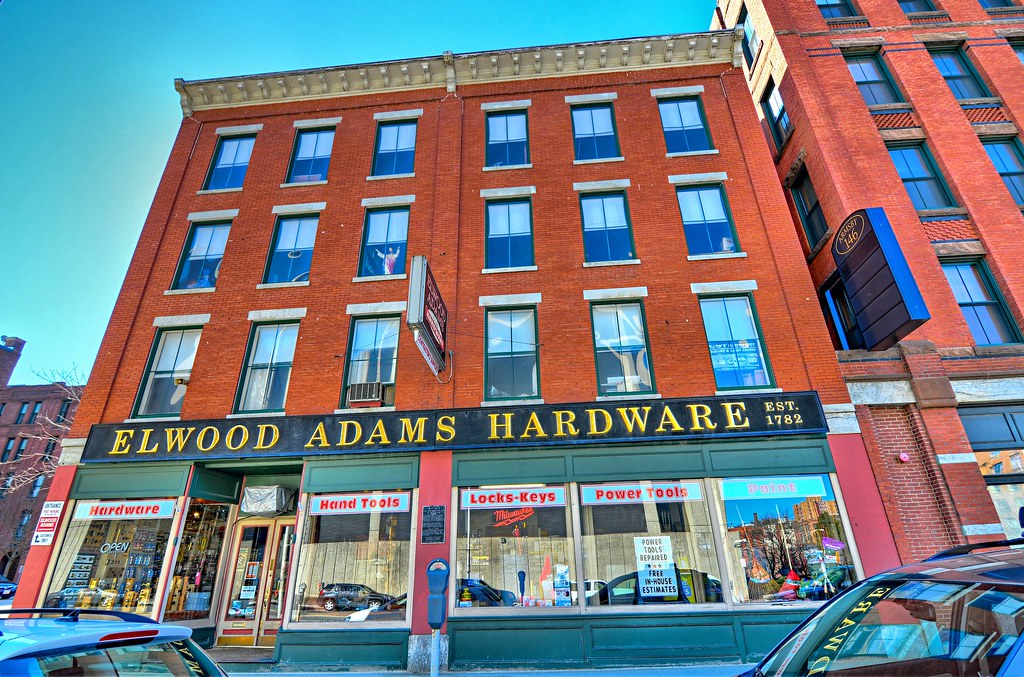
Adams, Elwood Hardware Store

The Old State Mutual Building (1870)housed the 5th largest insurance company in the US. It is now the Worcester County Sheriff's headquarters.
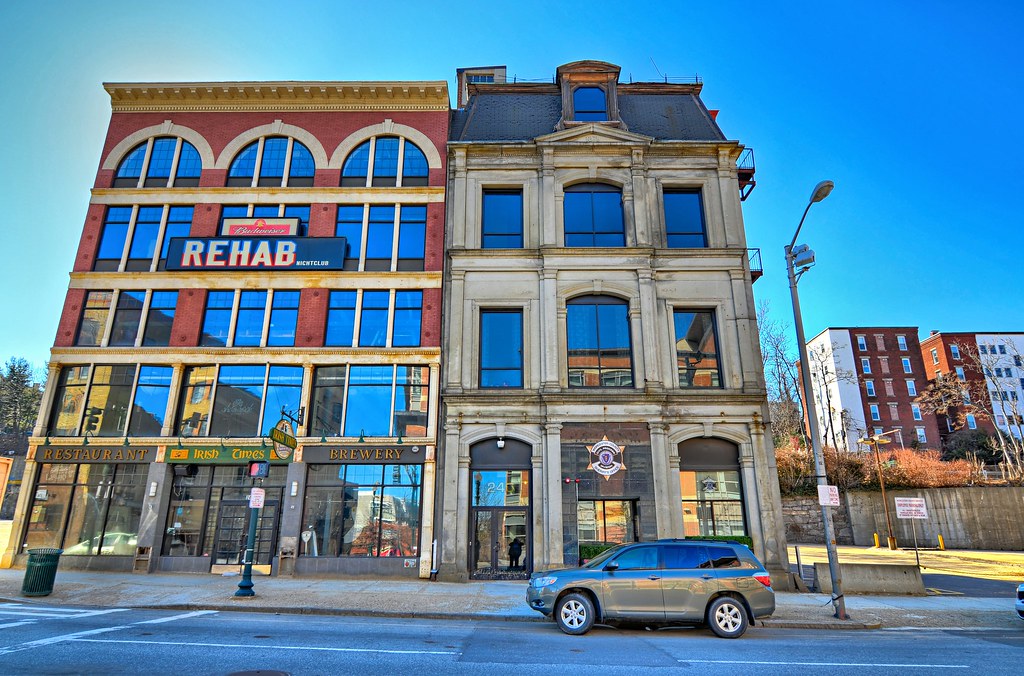
Old State Mutual Building Worcester MA


Between the State Mutual and the Elwood joint lies the Thule Building built in 1905. This was a connection to the developing Swedish business community in Worcester. It now houses a printing company and the Worcester Law Office. It is right across the street from the new Court House.
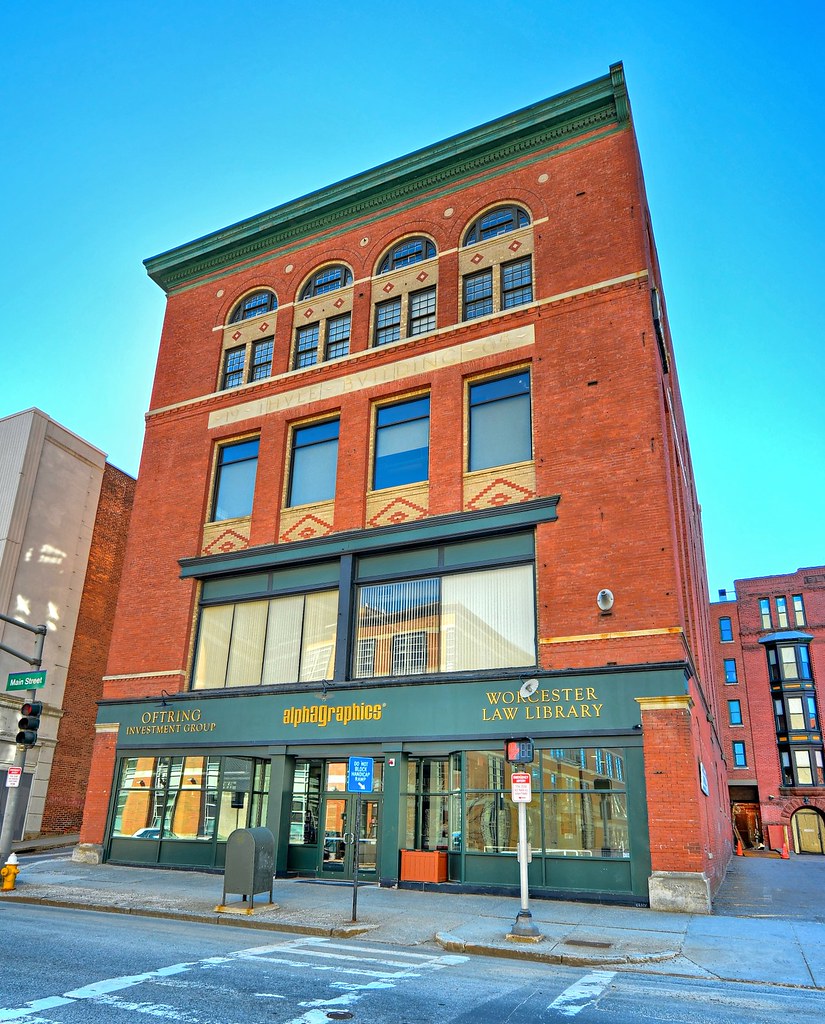
Thule Building - Thule Music Hall


I drove up and down the street looking for the Gilman Block. Back and forth, checking numbers on the buildings and finally figured out it was razed for the new Court House. Actually the architects and builders incorporated some of the old Gilman Block into the structure of the new Court House.


I always knew Worcester was a hilly place, but didn't realize how steep some of those hills were. The Tilley Raymond house sits about 3/4 the way up George St. I mean straight up. I was glad I was not on the bike today. I parked up at the top and walked down. I passed this fellow coming up the street and said "now that's a hike", he said "no kiddin'" The Raymond house (his name should be the other way around, Raymond Tilley and not Tilley Raymond) was built in 1847 and owned by a carpenter. The house has been apartments since Whitcomb purchased the property in 1898.
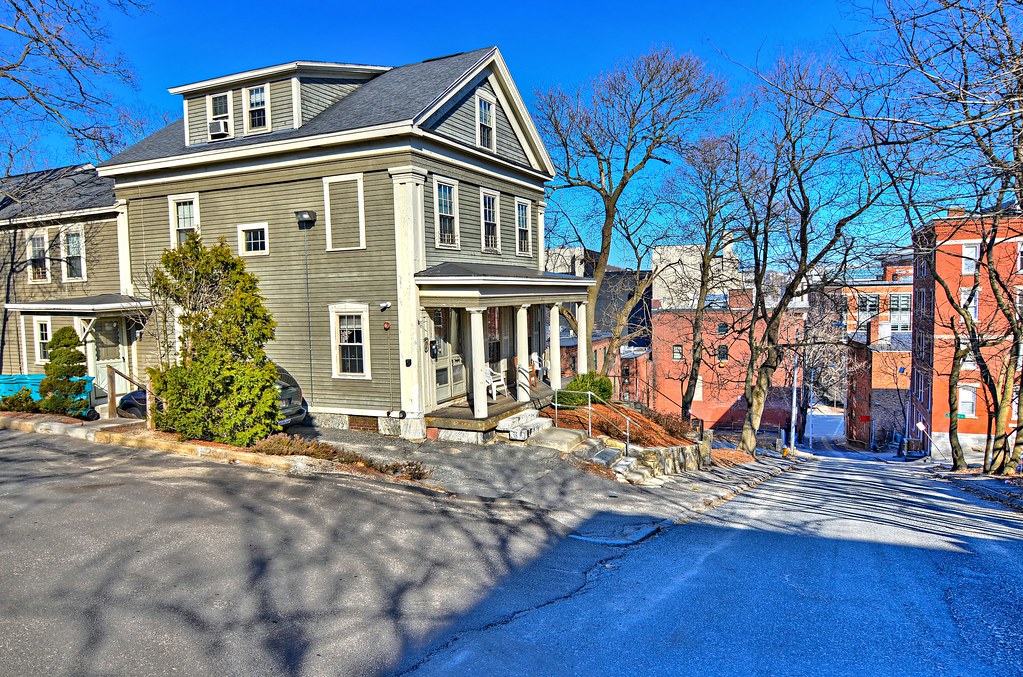
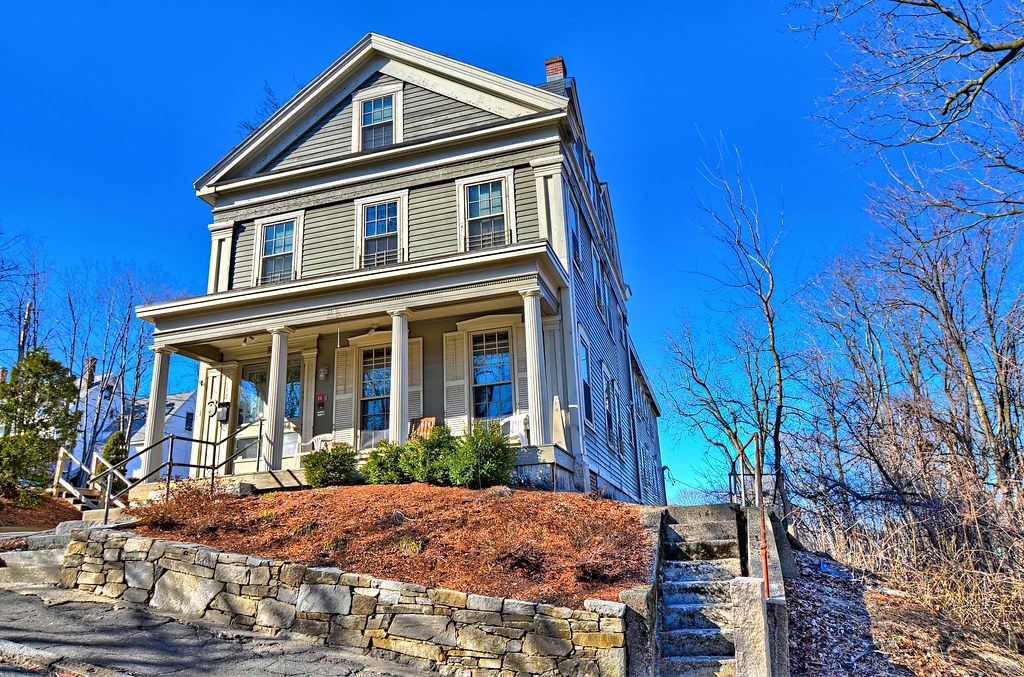
Raymond, Tilley House

Raymond, Tilley House


The next 2 houses sit on Harvard St and good examples of Victorian architecture. The first one was built in 1867 and the second 1887
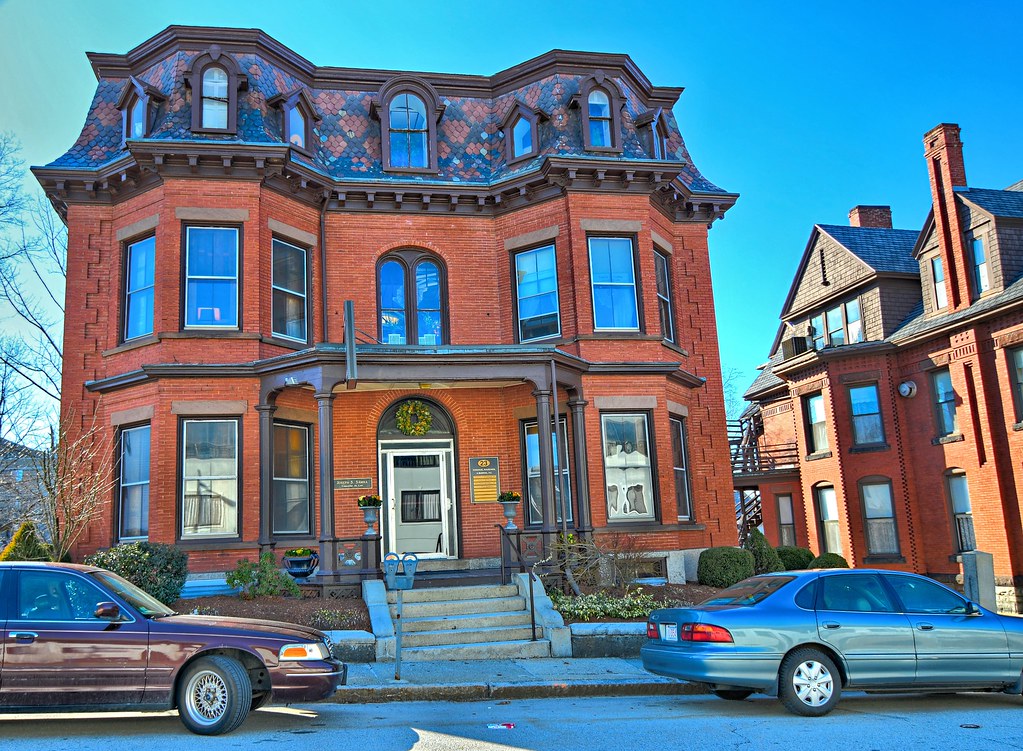
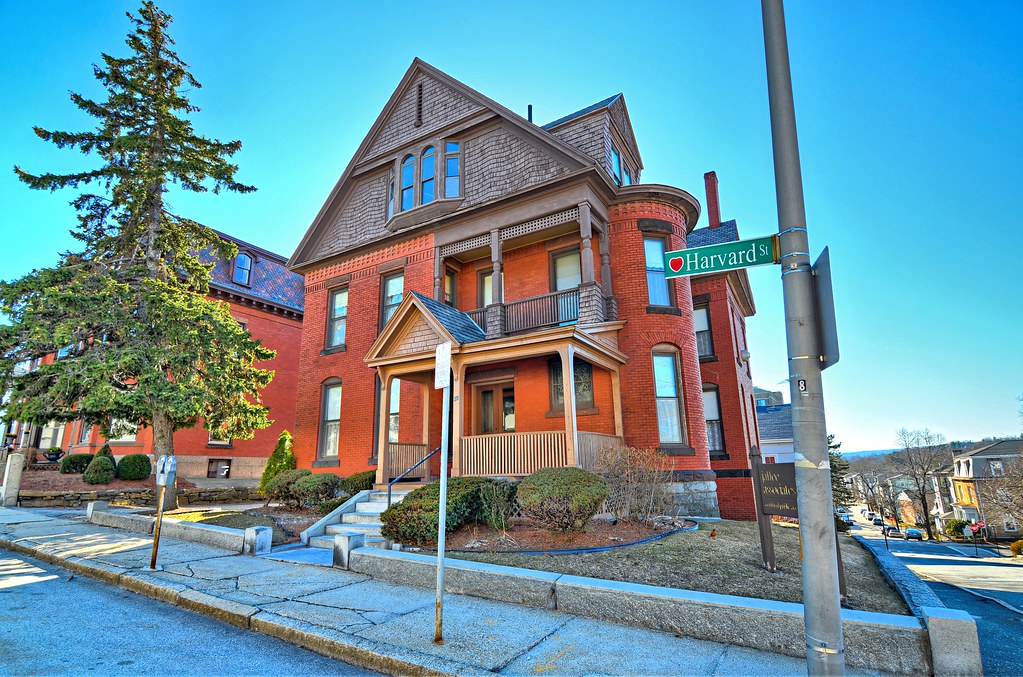
Marble, Jerome House

Putnam, Otis E. House


The Copeland house was built in 1847 and is an elaborate Greek Revival style residence. Copeland worked as a tool maker in various places until he started his own company. He claims to have made the first iron planning machine ever used.
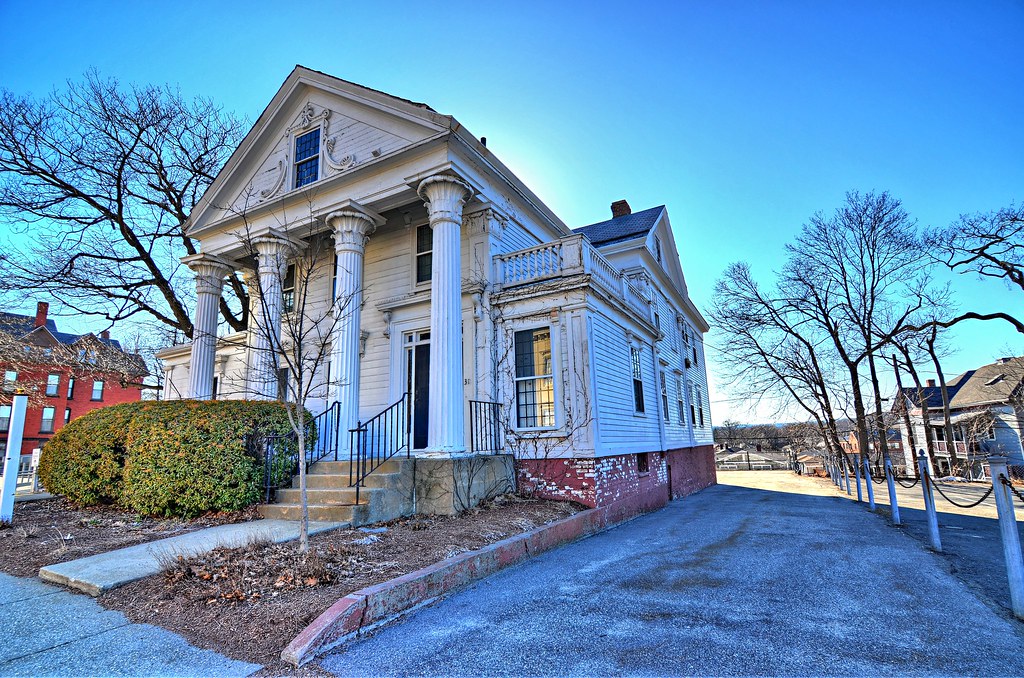


Copeland, Samuel House

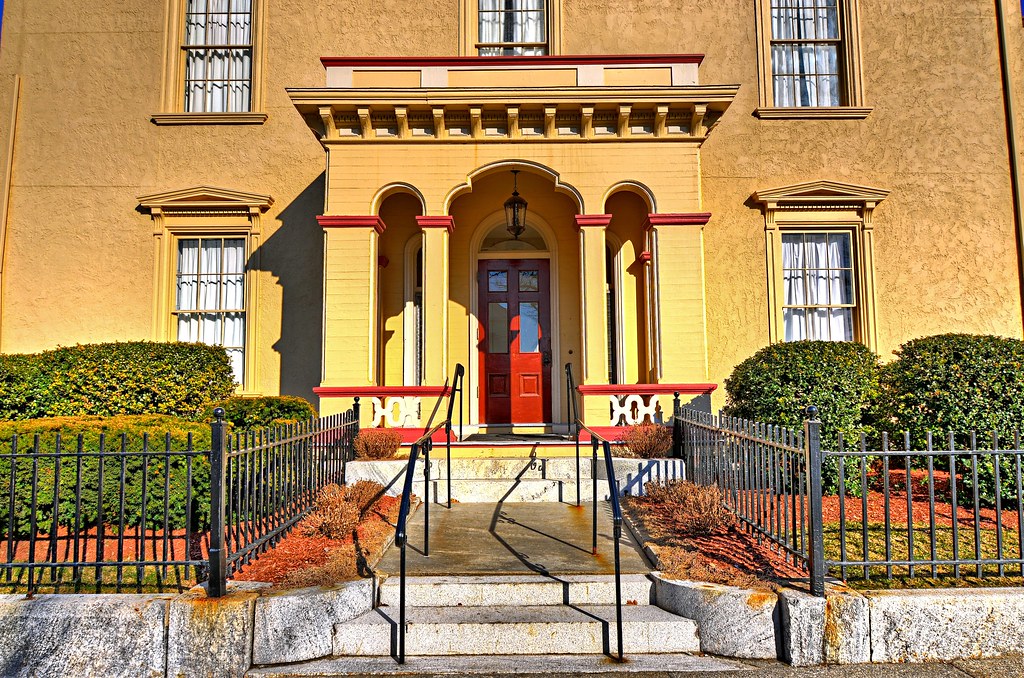
Henry Goulding built this mansion in 1850 as a retirement gift to himself. He made his money in the woolen machinery business. His heirs sold the house to the Swedish Lutheran Church, who expanded it for the aged.
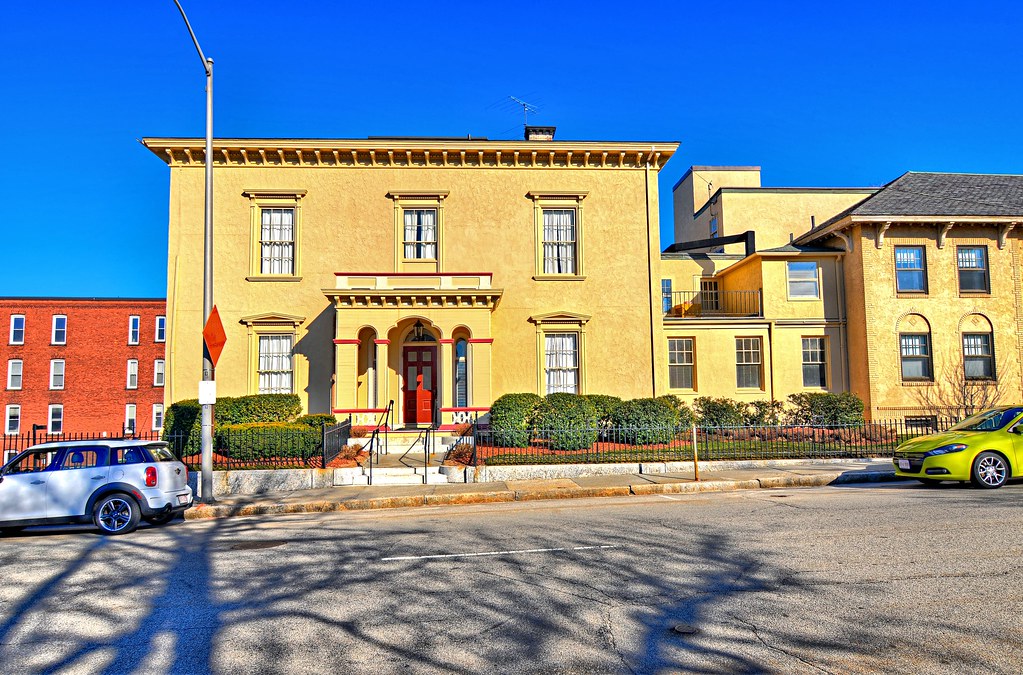
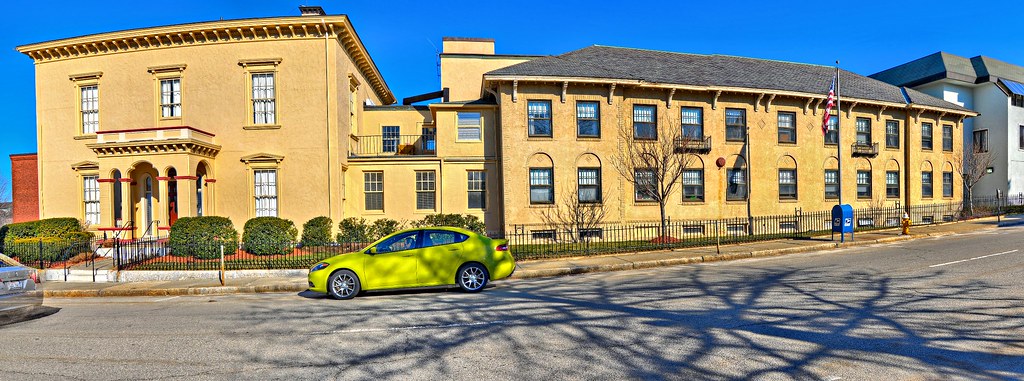
Goulding, Henry Mansion

Goulding, Henry Mansion

Goulding, Henry Mansion


The Whitcomb joint was built in 1879 and really is quite large. Whitcomb owned the Bay State Envelope Company. In 1895 Worcester produced 33% of the stapled envelopes in the US and Whitcomb got his share.
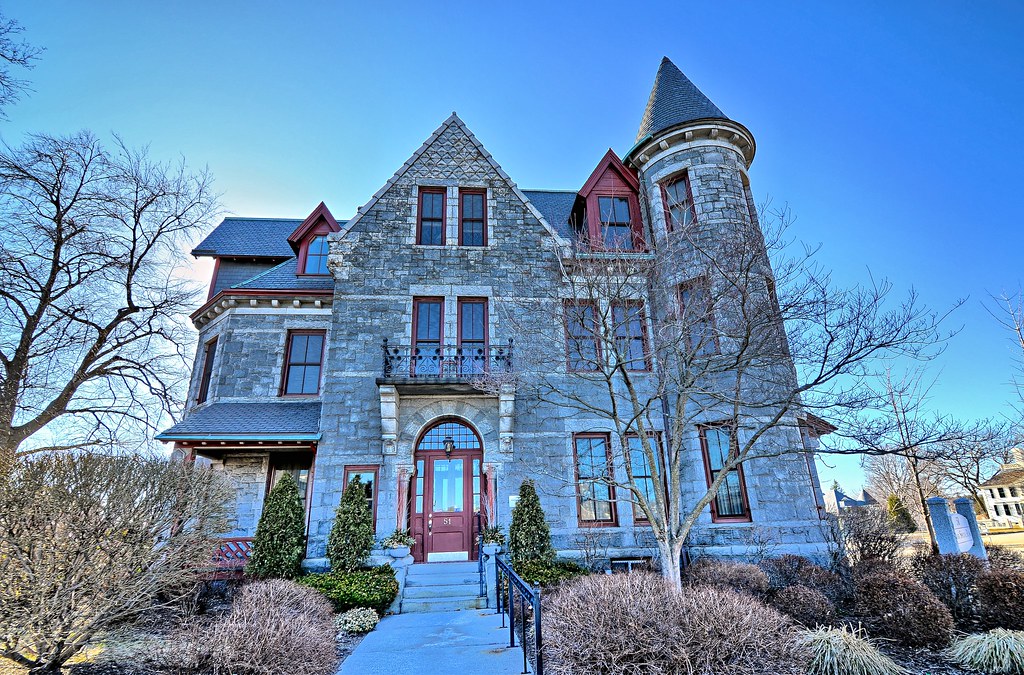
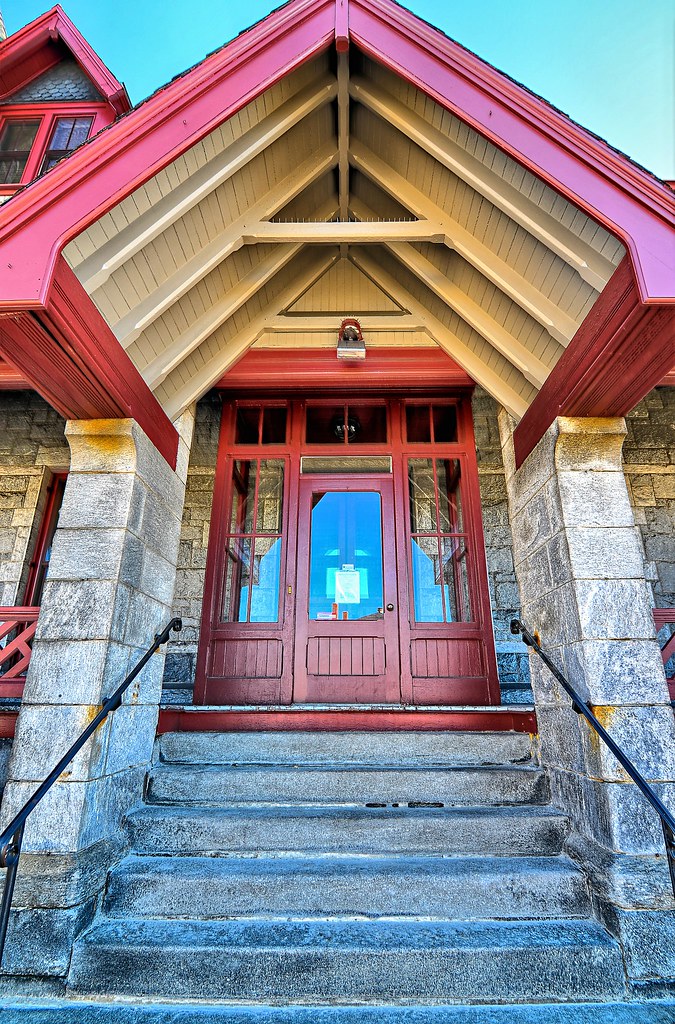
Whitcomb, G. Henry House

Whitcomb, G. Henry House


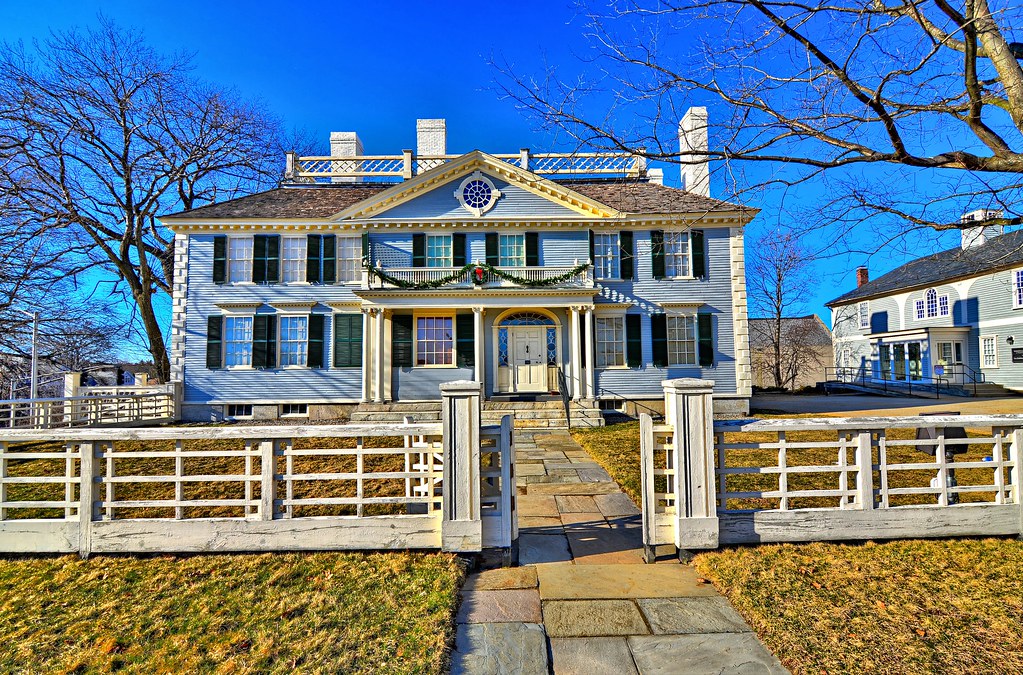
The Salisbury's, I, II and III were quite instrumental in the development of Worcester. I lived in the mansion to the left, II and III lived in the place to the right.
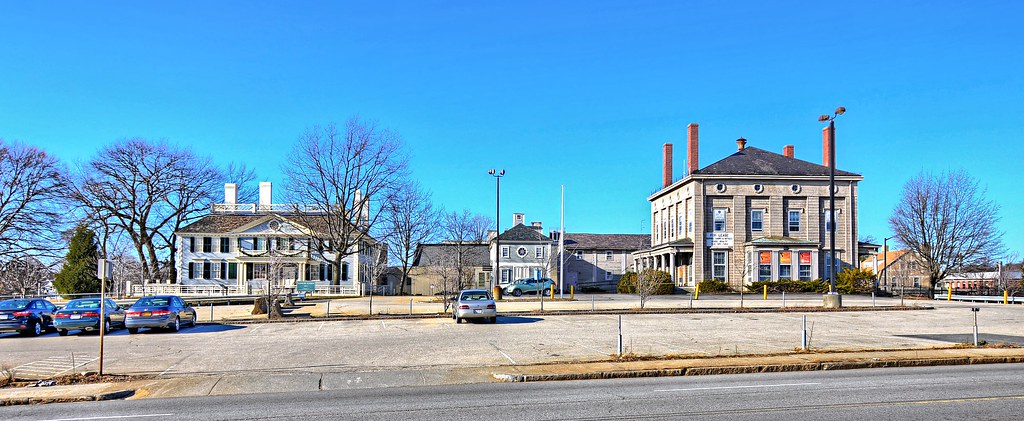
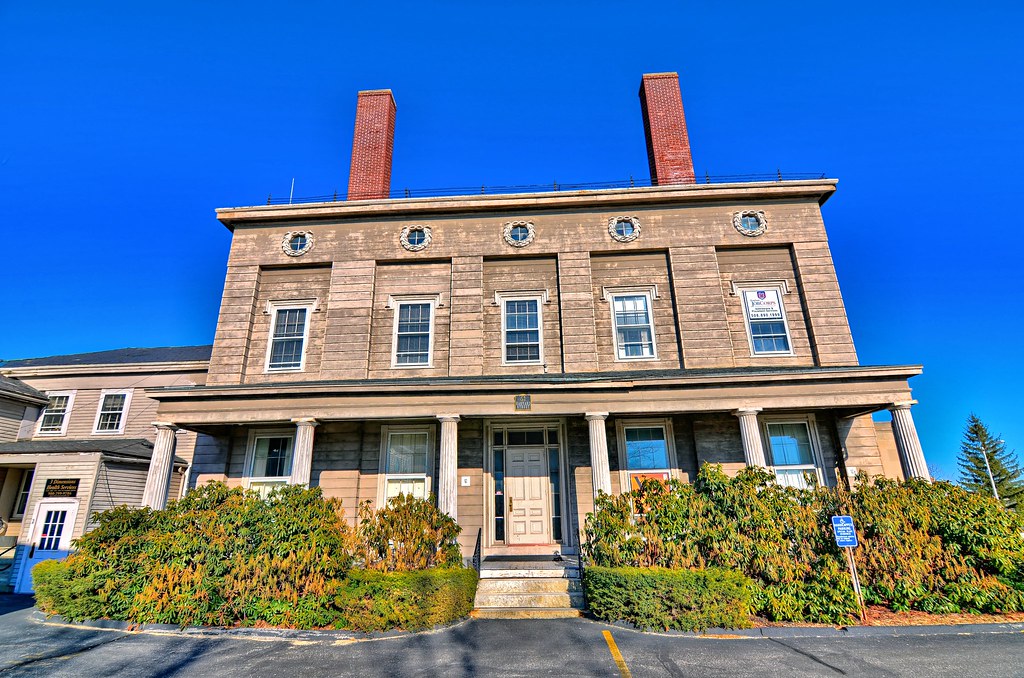
Salisbury Mansion, Store and House

Salisbury House Worcester MA

Salisbury Mansion Worcester MA


The Salisbury's lived right across the street from Memorial Auditorium. They owned the land that it was built on. The backside and another entrance.
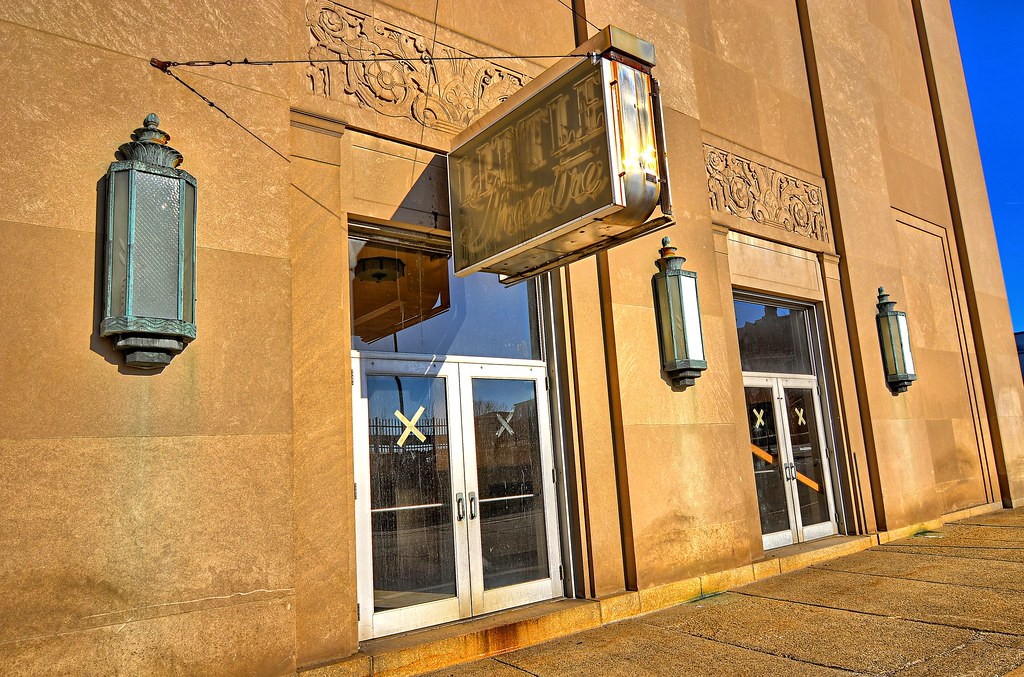
Little Theater Worcester Mem Aud

The last 2 places are early residences of Worcester. The first place is the John Riordan 3 Decker home. There are a ton of these in Worcester on the Register. It was one of the earliest examples of 3 Deckers in Worcester. Built in 1888 and close to the factories of downtown Worcester.
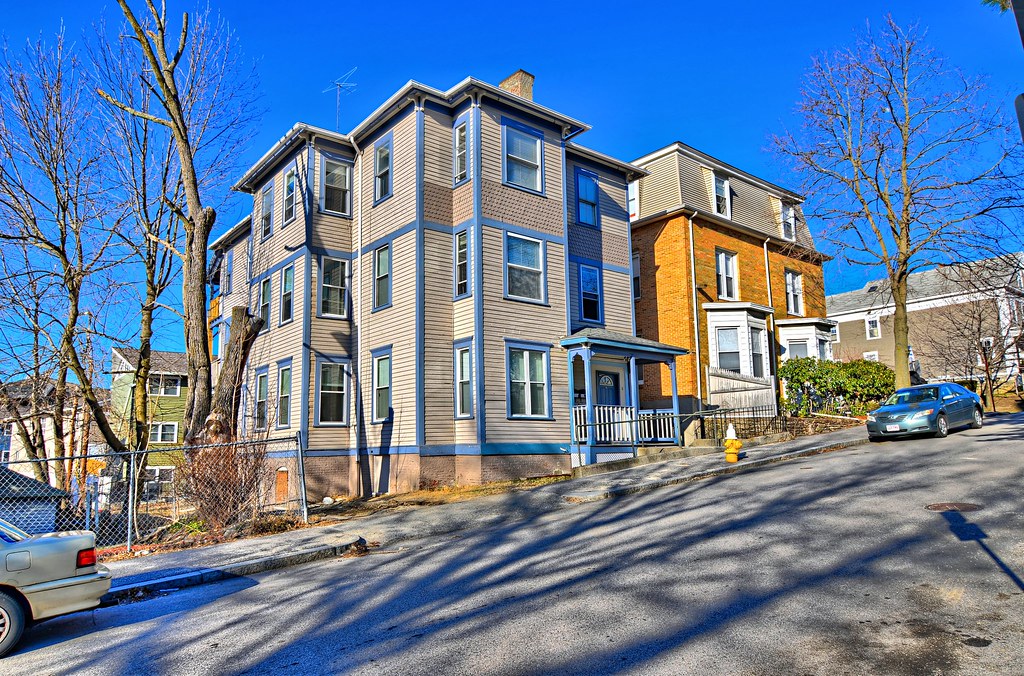
Riordan, John Three-Decker Worcester MA

This house was owned by Goulding (as noted above). He moved this house to the back of the lot, so he could build his mansion.
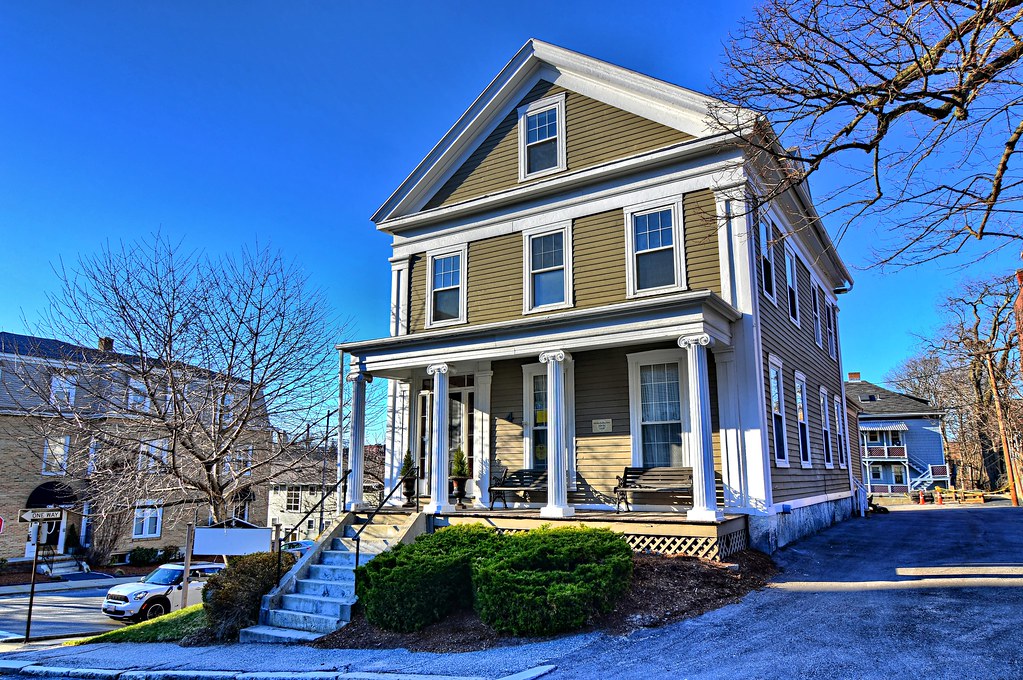
Goulding, W. H. House Worcester MA

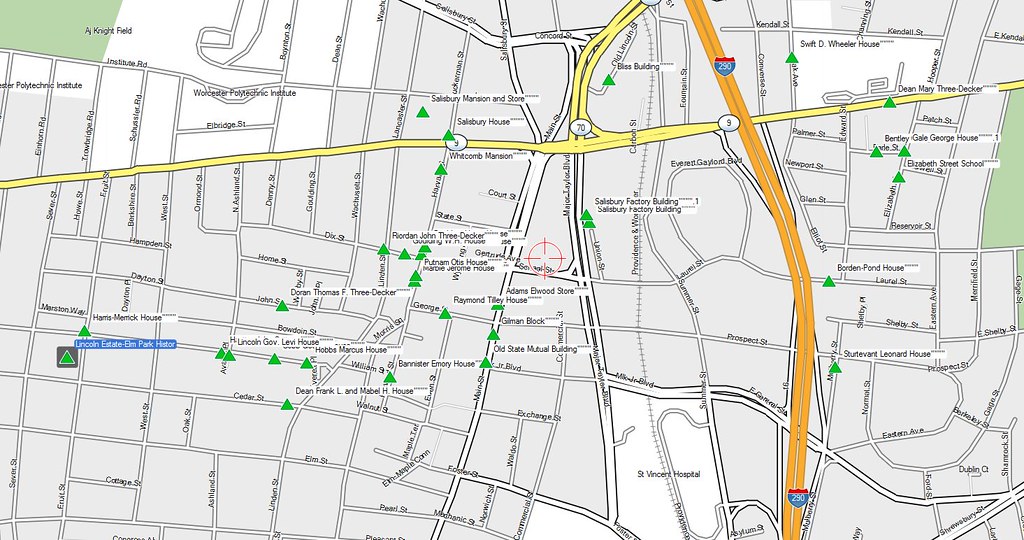
The area covered today.
T 2014 04 06


Friday, March 28, 2014

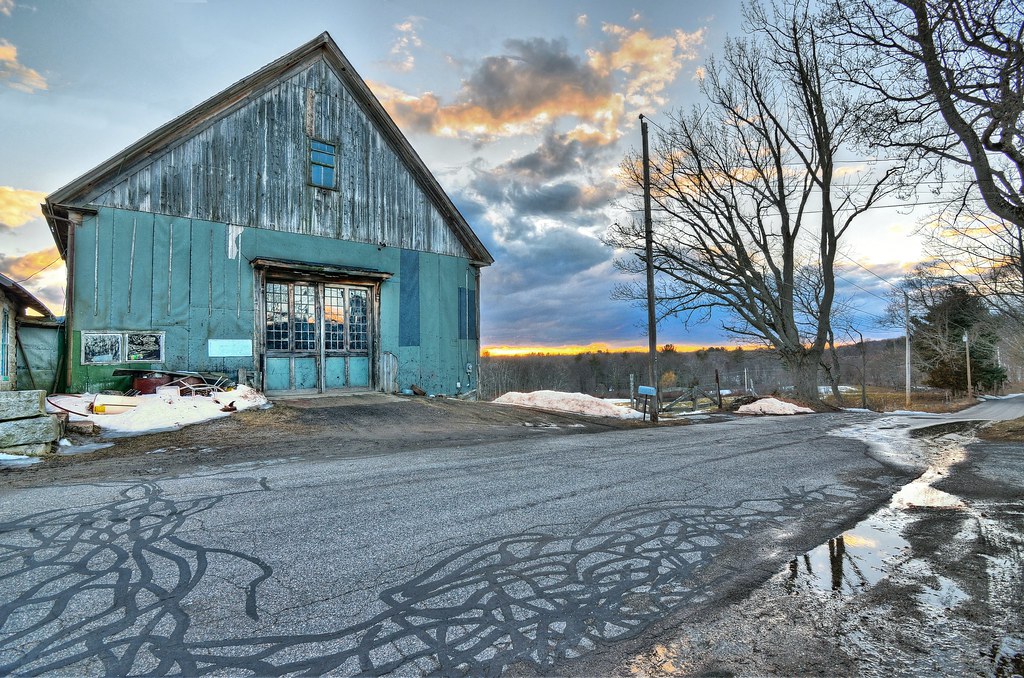
Thornton Ave Barn

I was out a couple of weeks with the camera trying to capture the spectacular sun set we were having. I headed for Nipmuc Pond on RT 16 hoping to get some nice pics across the lake. On the way back, no really good pictures (even thou MN provided it) and turned onto to Thornton Ave and came across this barn. Stopped, snapped a bunch of brackets off. When I got home, the shots were miserable, out of focus and just plain uck.


Having remembered that day with the sunset, I went back again with tripod in hand this time. Actually I was trying out my new monopod that has been sitting in the back of the car.


This picture has gone thru many iterations fixing this, blending that, more of a teaching photo for me, than a really great shot. I really like the doors on this barn, and a few have commented, "I wonder what kind of car are behind those doors". A 50's Vet maybe, 60's Cobra or maybe a 70's Plymouth Superbird. One of these days I will stop and ask.


DSC_8188 89 90 Line Elim V2


Wednesday, March 26, 2014

Let the Games Begin

It has been a tough winter, the coldest in a long time that is for sure. Even spring is struggling to get underway, however when ever day light savings time comes about and I leave work and it is light out, it is a reminder that riding season is right around the corner.


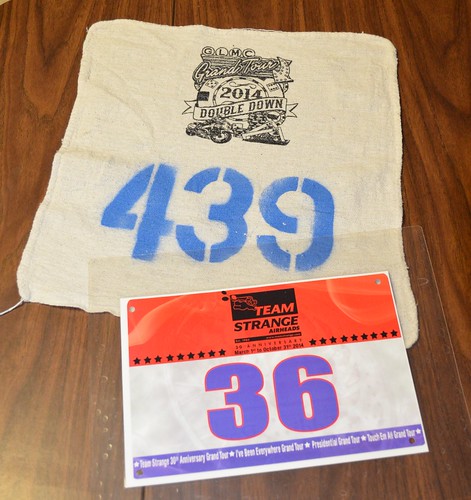
This season I have entered 3 grand tours. First one is called the Double Down Grant Tour, sponsored by the Glacial Lakes Motorcycle Club or GLMC for short. I have been doing their Grant Tour for the last 4 or so years. Last year I got to July and I hit a wall (not literally) in my desire to ride, so my finish was not so great. This year I will be chasing towns with double letters in it, like SuTTon. You get 1 point for each town, but if the town has a double set of points you get 2, and so on and so. An example of a double would be Little Egg Harbor in New Jersey. A triple, a hat trick would be >>


Lake Chargoggagoggmanchauggagoggchaubunagungamaugg


Actually that is more than a hat trick, more like Iambic Pentamaber, which might be not so unusual in language, but very rare for the Double Down Tour. Matter of fact I have not found any triple towns yet. Oh, LL like Someville has been excluded. I have found 224 towns in the states of MA, CT, NH, VT, ME, NY, PA and NJ. Once you have found a town in one state, that name can not be used again.


The next one is Team Strange, which has 4 of them to choose from. I have selected to spell out the following TEAM STRANGE AIRHEADS 30 and the Presidential Grand Tour. The spell one has 2 options; 1> Go to a town for each letter and get the Post Office or City Limit sign or 2> Go to the least amount of towns by using the letters in a combination that is the same as the beginning letters of a town. For instance you would cover TEA in Team with Teaneck, NJ. The Presidential one is go to towns, grab the post office or city limit sign for towns with the last name of our Presidents, such as Washington, NH. Washington Depot, CT doesn't work. You get extra points for finding a marker for towns where Presidents were born, thus Braintree is where John Adams was born and I am sure (actually I am positive) there is a marker indicating the John and John Quincy was born there.


So that is going to be the mantra for the season. Flags are in, tires have been ordered, new battery ordered, now all I gotta due is clear the ice and snow from the garage and I am set to go. Hmmm, maybe I will wait a bit and let Mother Nature get rid of the crap she put there in the first place.


DSC_8845 v1


Wednesday, March 5, 2014

Slipping around New Salem

New Salem is in the mid section of Massachusetts, just west of the Quabbin Resevoir and east of Northhamption. The historic district covers the Town Common and Main Street as it spreads north and south from there. Most of the buildings were built in the 19th century. It was first settled in 1734 and owned thru a grant of land for a plantation by folks that migrated from Salem, MA. In 1753, the ownership of the land was turned over to the Town of New Salem. The town was confined to a small area centering around the common, until 1930 when the Quabbin Reservoir was built. The town absorbed the former town of Prescott, parts of Greenwich and Enfield and part of Pelham.

DSC_8445_6_7 ES


I visited New Salem on a very hot day in August, where the sky was almost too blue and brilliant for good pictures.
Climax Electric Works was constructed for Levi Flag to manufacturer the T&P Cycle Car. It was used to make his cars up until around 1912. After that time it served as the exchange for the Crescent Telephone Com and then used as a plumbing shop. It was ultimately acquired by the New Salem Academy as the Agricultural Building.

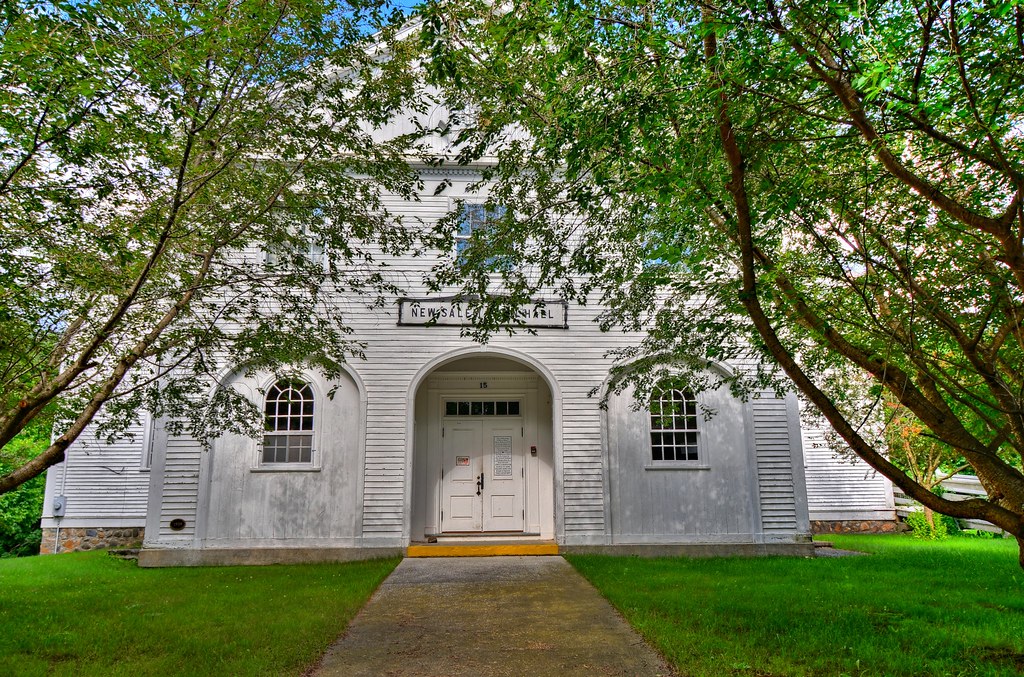
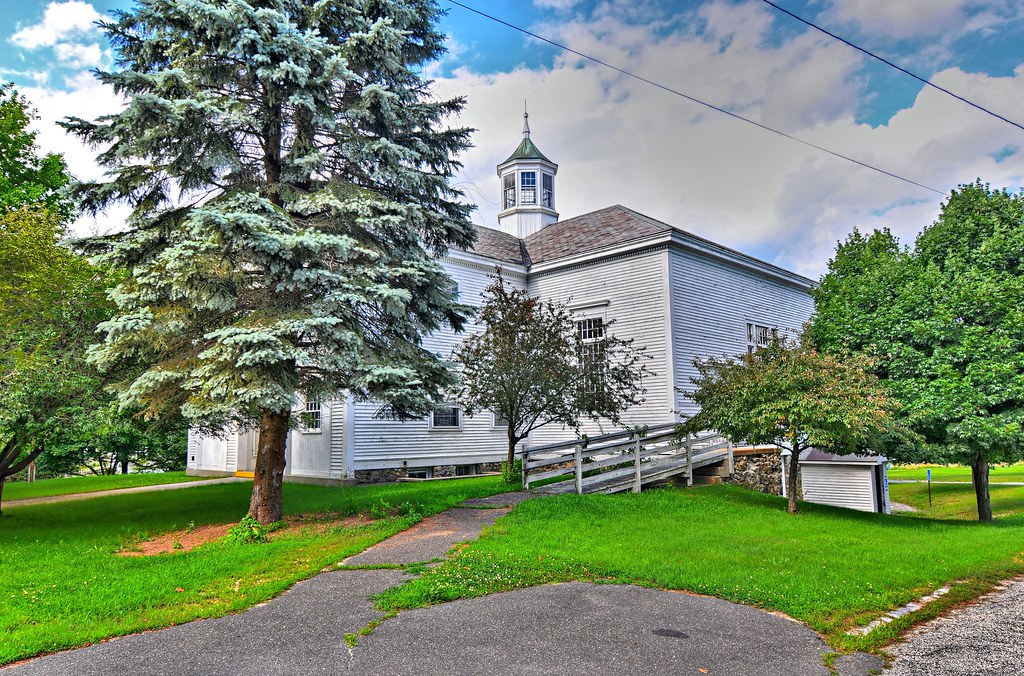
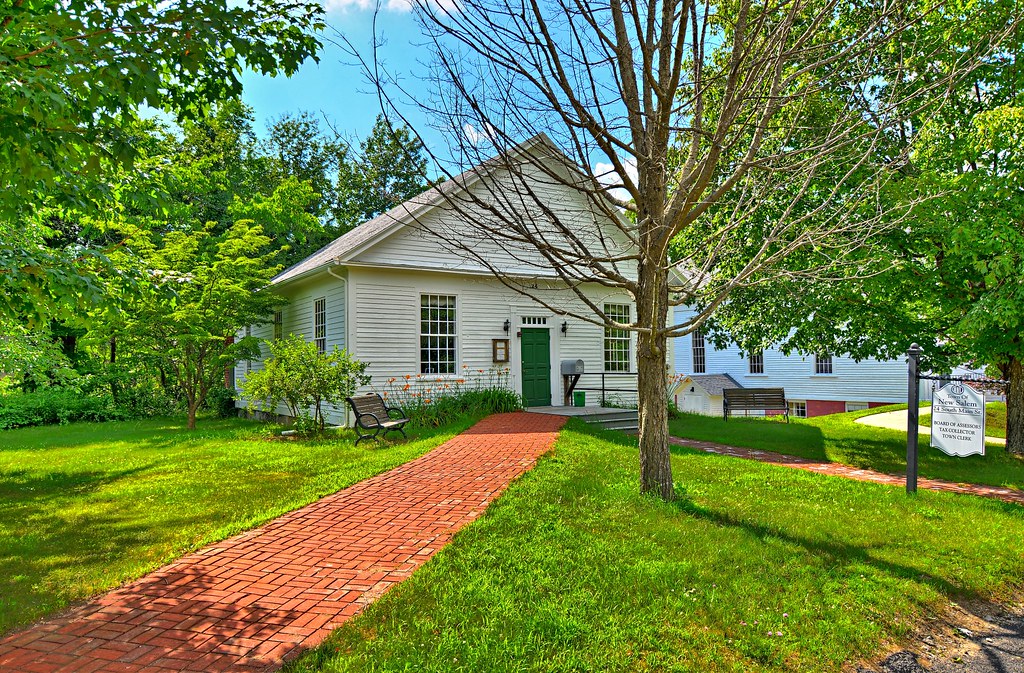
The new Town Hall was completed in 1939 and replaced the original 1838 Town House. The town had simply outgrown the original building. In addition to the administrative functions of the town, the building is used for various town functions like potluck suppers, children’s Christmas party and other entertainment.

New Salem Town Hall

New Salem Town Hall

The old Town Hall was built in 1838. For awhile it served as the library. Today it is the Town Clerks Office, where you can contribute to the town in the way of taxes.

New Salem Old Town Hall

New Salem Old Town Hall

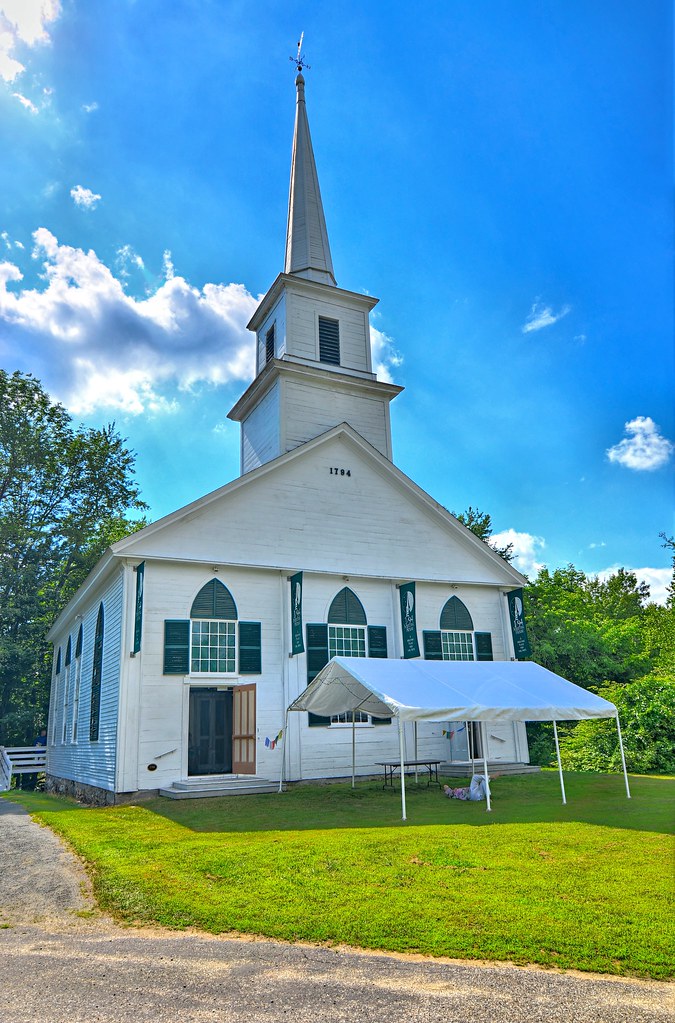
The New Salem First Congregational Church was built in 1794 and was built on site where the original meetinghouse built in 1739. This church served the Congregational Society until 1845, where all religious activity ceased. The building was then used for various public purposes. In 1837 the building was completely remodeled in the Greek Revival style and the steeple was added. In 1987 the Congregational Society transferred ownership to the Town of New Salem. Today it is used as a regional performing arts center.

New Salem First Congregational Church

New Salem First Congregational Church


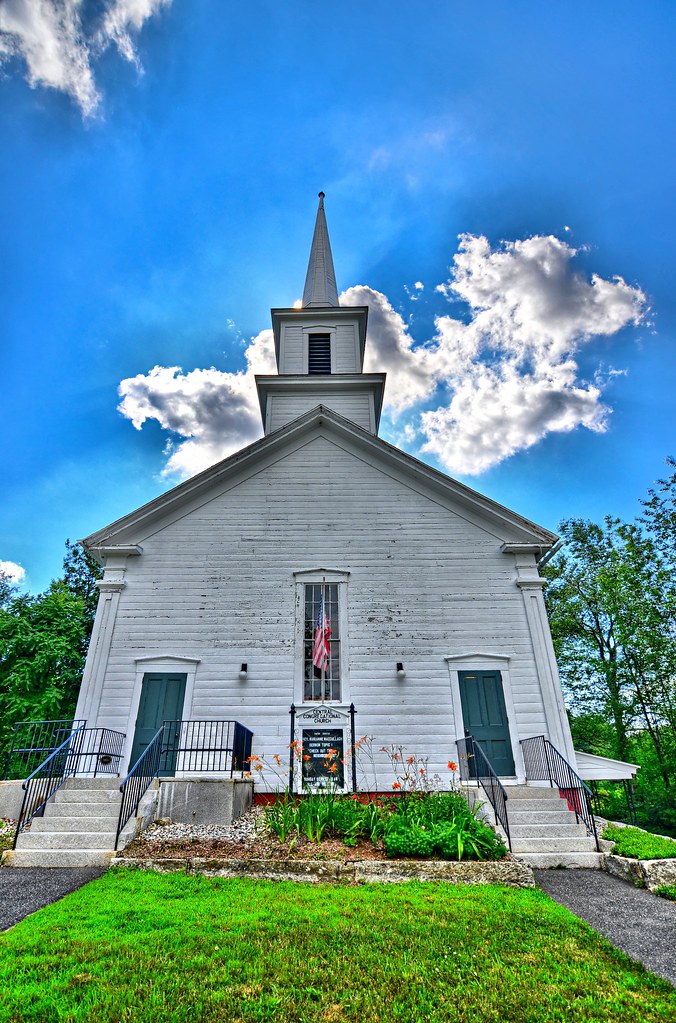
Right down the street from the First Congregational Church is the Third Central Congregational Church. This church was built in 1854. This church was built due to the schism occurring in the Protestant religion in the early 1800’s. The First Congregational Church joined the Universalist dominion in 1823, and the remaining congregation organized the Third Congregation, also known as the Orthodox Congregational Church. The First Church with the split and loss of members could not financially sustain themselves and ceased having meetings in 1845. This church continues to support a small congregation today.

New Salem Third Central Congregational Church


New Salem Third Central Congregational Church


The Congregational Church is a Protestant organization where each congregation independently and autonomously runs its own affairs. They arose from the Nonconformist religious movement during the Puritan reformation in England. Most of the Congregational Churches in New England emulated from the Plymouth Colony and Massachusetts Bay Colonies. The Universalists claim that religion is a universal human quality and is defined as a set of beliefs concerning the cause, nature, and purpose of the universe. This society accepts all religious beliefs and it is believed it was influenced by Hinduism, even thou it has deep roots in Christianity.


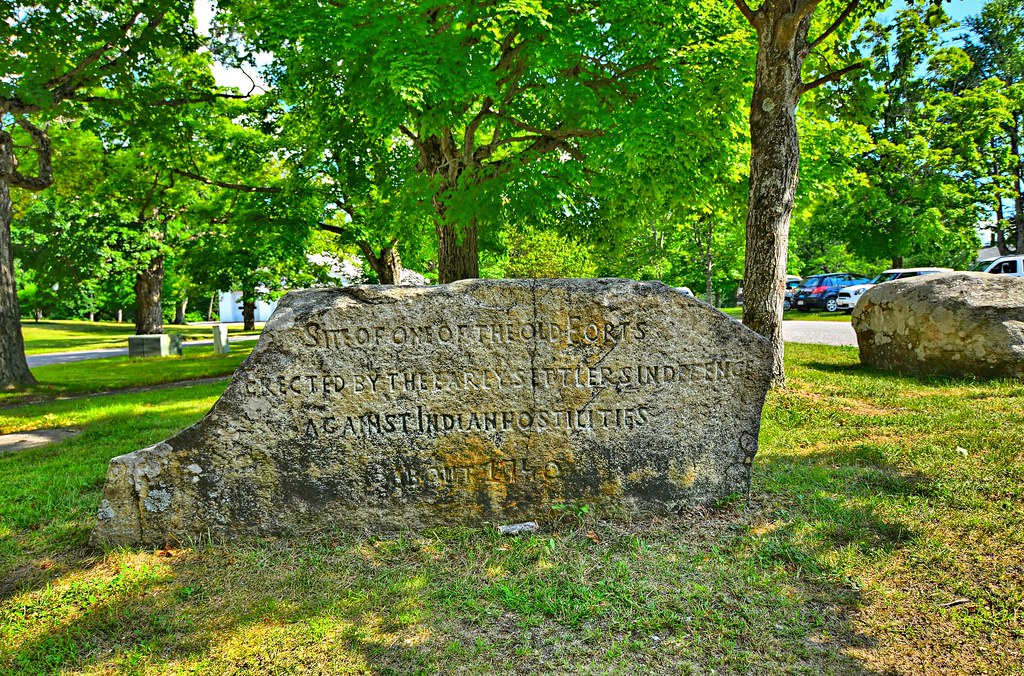
The New Salem Fort Marker was placed here in 1903. The inscription reads “Site of One of the Old Forts erected by Early Settlers in Defence Against Indian Hostilities about 1740”. It is presumed the fort that the rock refers to was a stockade around some building, possibly a meeting house built in 1739. Historical rumors indicated there were 2 more forts in the town as well. New Salem was considered a frontier town, however there is no historical information that there was ever an attack against the town.

New Salem Fort Marker

A story does float around, at one time when the men of the town were absent on a scouting mission, the women, children and old guys were assembled in the fort. It was discovered that an enemy was creeping toward the fort and one of the women, Mrs Jechoadan Ward Felton, deepened her voice, and called the roll of the men’s names, commanding that they load their guns and prepare to fire. The enemy thinking the fort was strongly armed with a force retreated. The presence was verified the next day by theirs tracks. So the story goes.

New Sales Academy was founded in 1795. This building replaced the original building that burned in 1837 and was built in 1838.

New Salem Old Academy Building

New Salem Old Academy Building

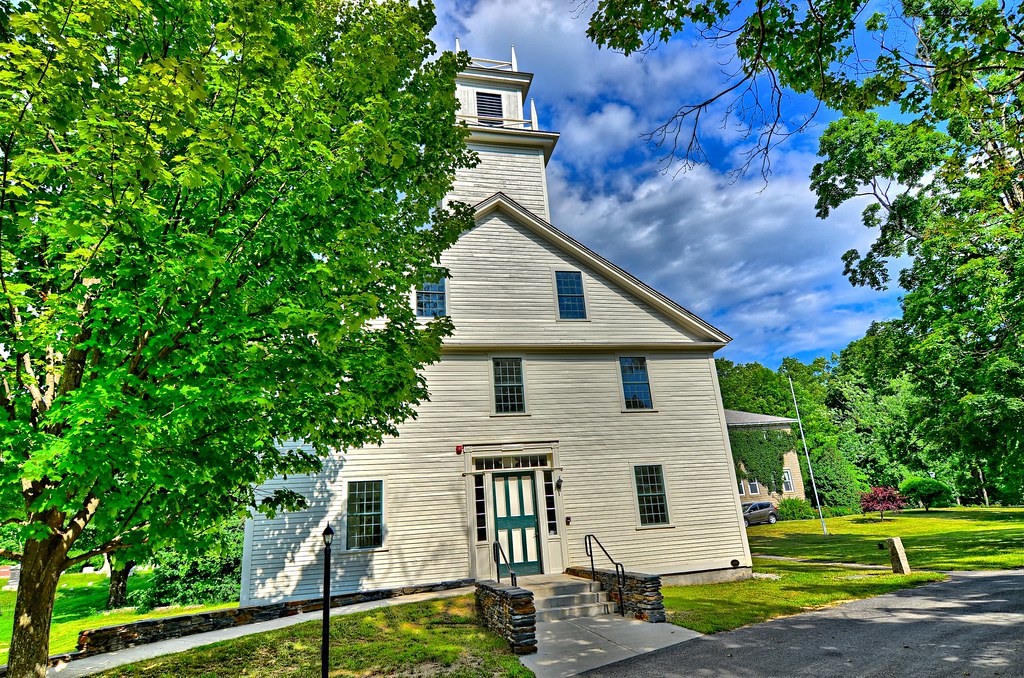
The Town felt it had outgrown the Old Academy building and built this one in 1908. It is constructed of hollow cement blocks and sports an observation deck and bell tower.

New Salem Academy

New Salem Academy

In 1871 the Town of New Salem built a boarding house for the students. In 1935 it housed the Household Arts Department. It also served as an elementary school in 1941-42, when the school districts were consolidated. Today I believe it is a personal residence.

Academy Hall - New Salem Academy Dormitory

Academy Hall - New Salem Academy Dormitory

The houses of New Salem for the most part were built in the 19th century and are typical of what you would find in all of the towns in New England. I have chosen to post some examples of the houses, and make comments or expanded historical context when interesting or important.

All of the homes in the historic district are on South Main Street. This group of homes are located as you enter the home and move up a small incline into the center of the Town, where the churches and academy is located.

Lyons, Asaph House

Lyons, Asaph House

Packard, Noah House

Packard, Noah House

Allen, Frederick H. House

Allen, Samuel C. House

Allen, Samuel C. House

As you pass the center of the town South Main St extends beyond the common, where this group of homes is located.

White, William H. House

Harris, Willard House

Roboteau, Charles House

Knight, William House

Friday, February 14, 2014

Walking around Wendell Common


Wendell sits in the northern section of Massachusetts and just a little west of center. It is north of the Quabbin Reservoir. Wendell was originally settled in 1754. The cemetery was set aside in 1781 and the year the town was incorporated. With a population under 1,000 people it is still a small town. In 1820 the census had the population at 920, in 2000 it was 986. A second center did come about with the railroad coming to the area, however that area is just about gone and Wendell Common remains the true center of the town. Most of the buildings in the Common are Greek Revival. Luke O Leach the local master builder and lumber yard owner was responsible for building most of the structures.

Wendell is a unique survival of 19th century lifestyles, ways of thinking and the buildings to supports its history.

Probably the two most significant buildings in Wendell is the Baptist Church and the Congregational Church. They are just down the street from one another and form the basic sides of the Common District.


The Central Congregational Church was organized in 1774, but this church was not built until 1846. It did have a steeple at one time however it is gone today. There is evidence that this church has 2 steeples. Today I would say the building is in need of major repairs.


Central Congregational Church

Central Congregational Church

Wendell Center Cemetery


Across the common is the Baptist Church built in 1845. It also served as the Town Hall. The Baptists had a membership of 21 persons and ceased meeting in this building around 1864.  Somewhere around 1919 the building was purchased by the town and used as a Town Hall. This building also had a steeple but is gone today.

Baptist Church Town Hall Wendell MA

Baptist Church Town Hall Wendell MA


The library society was formed in 1821, but they did not build their first library until 1921. The library is in mint condition.

Wendell Free Library

Wendell Free Library

This is the Clark Stebbin House built in 1835. History has it that Stebbins ran a small store out of the house selling ready-made clothing, hats, caps, shoes, boots and other dry goods.

Clark - Stebbins - Lewis House

Clark - Stebbins - Lewis House

You see that section that comes off the green house. That was built around 1820 as a store by Henry Atkinson Green. At one time it was not connected to the house, which is also known as the Summit House.

Howe, J. - Gould, Lyman House

The green house referred to above was built in 1845 by James Howe. In 1871 Lyman Gould became the owner and operated the building as a hotel , called the Summit House.

Howe, J. - Gould, Lyman House

Howe, J. - Gould, Lyman House

This house was also a store built between 1858 and 1875. The town center was growing due to the additional commerce generated by the Summit House. Other than it was owned by a person named Forbes, no other information is known about the person. Hmmmm

Forbes, J. Building - Wendell Town Common Historic District - Wendell MA

Forbes, J. Building - Wendell Town Common Historic District - Wendell MA

The last house of this tour is the Chittenden / Gates house built in 1843. What is striking about this house is how wide it is across the front but so narrow in depth. First owner was Edwin Gates who was a selectman in 1868. It appears that Otis Chittenden owned the house next and was the town clerk from 1856-1867. Charles Ballou took over from there, who was active in the civic affairs of the town and also owned the Baptist Church for a bit.

Chittenden, Otis - Gates, Edwin L. House

Chittenden, Otis - Gates, Edwin L. House

This finished up the historic part of the trip. Right down the street is the Wendell Post Office which I grabbed to add to my collection of Post Offices.

Wendell MA Post Office